Guides
Pouches, Explained
The name on the product page is only a clue. The useful questions are how much room the pouch has once worn, where it puts pressure, and whether it lifts, separates, or simply gets out of the way.
Direct answer
Shape matters more than the label
Do not give the name too much credit. A flat pouch tends to contain. A natural pouch usually allows more space. Structured and dual systems do more active work. The better design is the one that puts the room, pressure, lift, and separation where you actually want them.
These are overlapping descriptions, rather than six strictly separate designs. A pouch can be anatomical, roomy and lifting at the same time, so I look at the construction instead of treating the name as a promise about how it will feel.
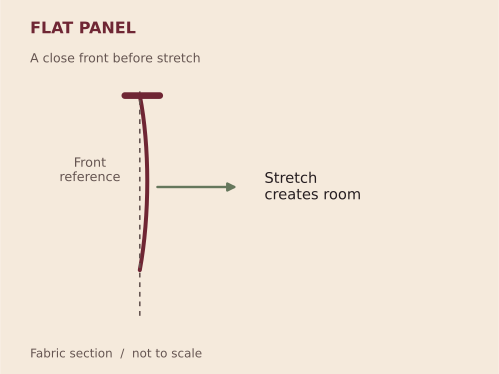
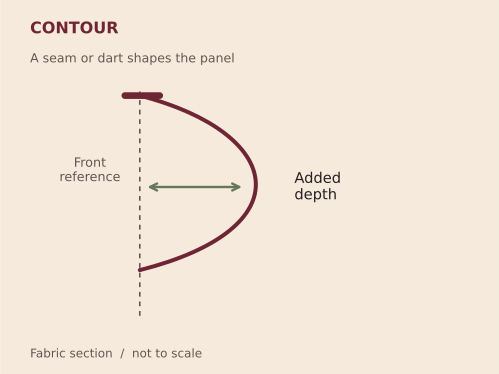
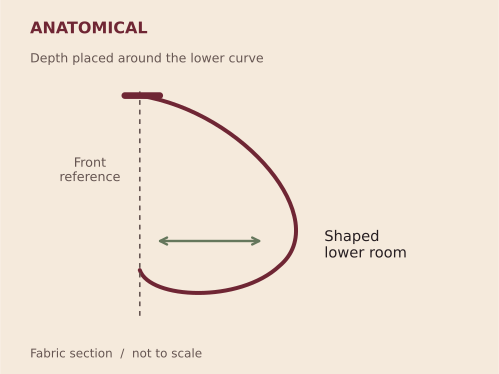
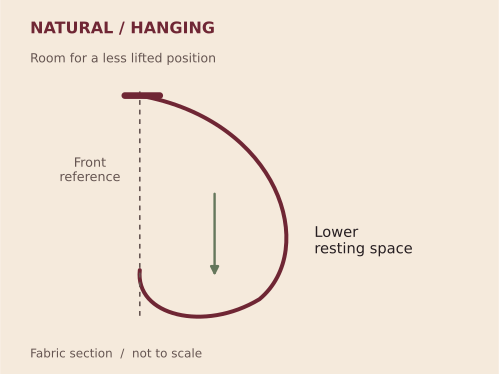
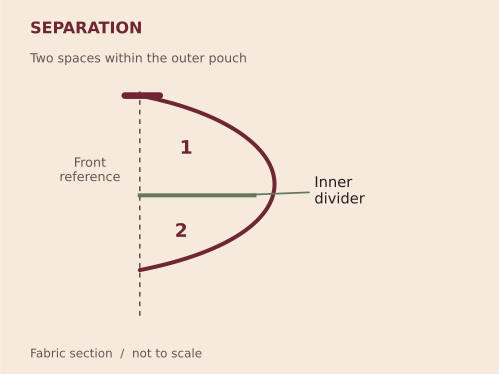
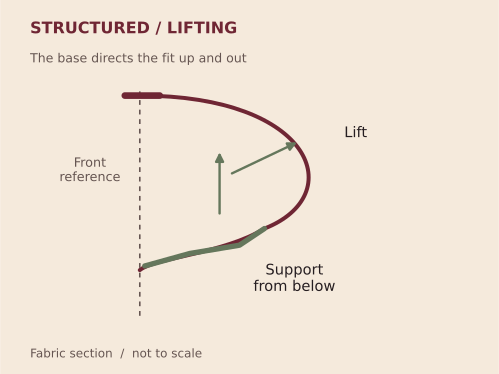
The diagrams show simplified fabric sections: the dashed line is a front reference, the solid outline is the pouch, and arrows show room or direction rather than measurements. The construction examples come from retailer and brand descriptions; the first-person comparisons farther down the page come from pairs I have worn.
Pouch type 01
Flat pouch
A flat front panel with little built-in depth. The fabric makes room mainly by stretching.
- How it tends to feel
- Usually close and compressive, especially when the fabric or leg openings are firm.
- What it can do well
- A low-profile front and simple construction.
- Where it can go wrong
- Space can disappear once the panel is under tension. A smooth outline may come with pressure.
- Who may prefer it
- Someone who prefers a contained fit or wants less forward shape under clothing.
Examples of this construction
- Gregg Homme Beyond Doubt Mesh Thong
International Jock describes a flat mesh front. An older listing used here to illustrate the construction.
- Gregg Homme Beyond Doubt Mesh String
The G-string in the same collection is also described with a flat mesh front. An older listing used as a construction example.
Pouch type 02
Contour pouch
A curved panel or center seam adds some depth before the fabric stretches.
- How it tends to feel
- More shaped than a flat front, though the amount of room varies widely.
- What it can do well
- A familiar middle ground: clearer shape without a complicated support system.
- Where it can go wrong
- A visible curve does not guarantee comfort. The seam and elastic still decide where pressure lands.
- Who may prefer it
- Someone who wants moderate definition and support without pronounced lift.
Examples of this construction
- BIKE Active Modal Stretch Supportive Thong (BAS319)
HisRoom identifies a contour pouch with a vertical center seam.
- Secret Male SMK014 Thong
Mensuas describes a contoured pouch intended to hold without flattening.
Pouch type 03
Anatomical pouch
A front shaped to follow the body rather than flatten it. Brands use the word loosely, so the actual pattern matters more than the label.
- How it tends to feel
- Often roomier at the lower front, with less sideways squeeze than a basic contour.
- What it can do well
- Natural positioning and useful depth when the pattern is well judged.
- Where it can go wrong
- Some designs add projection but little usable room. Others rely on a seam that can become noticeable.
- Who may prefer it
- Someone who dislikes a flat front and wants the pouch to accommodate the body’s shape.
Examples of this construction
- Obviously PrimeMan AnatoMAX Thong (A06)
HisRoom describes an anatomical fit and a base seam that gives the pouch its shape.
- Ergowear X4D Thong
International Jock describes a nose-shaped pouch with room and some enhancement, illustrating that anatomical does not always mean a low profile.
Pouch type 04
Natural or hanging pouch
A deeper pouch that allows a more relaxed resting position, although some designs also add lift.
- How it tends to feel
- Often relaxed, but the seam behind the pouch may still create support or lift.
- What it can do well
- Room and an easy drape during long seated periods.
- Where it can go wrong
- Less lift, and sometimes less stability during more active movement.
- Who may prefer it
- Someone who wants space and low pressure more than a sculpted outline.
Examples of this construction
- Obviously PrimeMan AnatoMAX Thong (A06)
An anatomical design that also illustrates the natural-fitting end of this spectrum; the categories overlap.
- John Sievers SLEEK Natural Pouch Thong
Its deep contour is marketed as natural, while the description also specifies tension behind the package for lift and forward positioning.
Pouch type 05
Dual-pouch or separation system
Separate panels, openings, or channels hold anatomy in distinct areas instead of one shared pouch.
- How it tends to feel
- More divided and guided. When the placement suits the wearer, it can reduce skin-on-skin contact.
- What it can do well
- Less skin contact and support in distinct areas when the panels fit well.
- Where it can go wrong
- There may be a learning curve, and extra seams or openings can feel fussy when the geometry misses.
- Who may prefer it
- Someone who actively wants separation and does not mind arranging the fit.
Examples of this construction
- Male Power Dual Pocket Pouch Thong (463-235)
Upper and lower internal pockets separate the anatomy. International Jock listed this pair as unavailable when checked.
- Versaley Micro Modal Cool Dual Pouch Men’s Thong
Sold as a dual-pouch thong; compare its internal arrangement with the upper-and-lower pocket approach above.
Pouch type 06
Structured or lifting pouch
Seams, elastic, or an inner panel pull the pouch upward or forward and help it hold that shape.
- How it tends to feel
- Secure and deliberate, with more lift and a stronger awareness of the support system.
- What it can do well
- Stable positioning, pronounced lift, and a consistent outline.
- Where it can go wrong
- The structure that creates lift can also create center pressure or more forward projection.
- Who may prefer it
- Someone choosing support and lift on purpose, rather than the least noticeable fit.
Examples of this construction
- John Sievers SOLID Natural Pouch Thong
The retailer describes rear-of-pouch tension that positions the package upward and forward, despite the Natural Pouch name.
- Cocksox CX05 Thong
The brand identifies its Original Pouch as the more enhancing, lifting design in its pouch range.
How I describe a pouch
When I call a pouch roomy, I mean the room you can actually use while wearing it, rather than how much fabric hangs off the front. A pouch can look generous and still squeeze at the opening or press firmly from underneath. That pressure, including where you feel it, is what I’m describing as compression.
Projection is how far forward the pouch holds you, while lift is how much it raises you. They often go together, but a prominent pouch can also let you hang fairly low, so a photograph of a pronounced front doesn’t tell you how much upward support you’ll feel.
Separation depends on what the fabric is keeping apart. Some designs hold the package away from the thighs; others use an opening or a second compartment to separate the penis and testicles. Those can feel quite different, which is why I describe the construction instead of relying on the word alone.
None of these descriptions tells you whether you’ll like the pair. I tend to favor a forward pouch with lift and some pressure underneath, while someone who wants the least noticeable fit may prefer something quite different. Support and comfort belong in my ratings because they reflect how well the design works for me. More room, more lift or firmer compression doesn’t automatically earn a better score.
What those differences feel like
Primeman and John Sievers: two natural pouches
In the Obviously Primeman, my package drops into the pouch in something close to its ordinary resting position. The John Sievers Lux Natural Pouch Thong also gives me space to settle, but the seam behind the package applies a little lift and brings it farther forward. When I sit down, I can feel that stretch holding me forward instead of letting everything hang down. I enjoy the slight separation it creates. Both let me fall into the pouch; where I land feels different.
SAXX panels and separate compartments
The SAXX panels keep my package apart from my thighs without making me pull through an opening. In the separate-compartment designs I have tried, that opening acts rather like a loop, holding me farther forward in another pouch. I can see the appeal if a prominent bulge is the goal, but the overlapping fabric and pressure around the opening tend to make these short-wear choices for me. There is often more material and arrangement involved than I want for an ordinary day.